

close
Choose Your Site
Global
Social Media
Views: 0 Author: Site Editor Publish Time: 2026-03-30 Origin: Site


You choose thermoplastic polyurethane for disposable medical catheters because it offers unmatched safety, reliable performance, and patient comfort. The flexibility and steerability of TPU catheters help you navigate complex anatomical pathways, improving device reliability and reducing trauma. Advances in TPU formulations reduce infection risks and enhance patient safety. The rise in minimally invasive procedures increases demand for kink-resistant, biocompatible materials like TPU. Regulatory shifts favor DEHP-free options, making Disposable White TPU Plastic Catheter a preferred choice for improved safety and patient outcomes.
TPU catheters offer excellent biocompatibility, reducing irritation and supporting healing.
The flexibility of TPU allows for easier navigation through complex anatomical pathways, enhancing patient comfort.
TPU catheters are resistant to kinking and tearing, ensuring reliable performance during use.
Choosing TPU eliminates the need for harmful plasticizers, making catheters safer for patients.
Antimicrobial properties in TPU help reduce infection risks, improving patient outcomes.
TPU maintains its strength and flexibility under various temperatures, ensuring consistent performance.
The transparency of TPU catheters allows for easy monitoring of fluid flow, enhancing patient safety.
Bova’s TPU catheters are designed for durability and compliance with strict safety standards, ensuring high-quality care.
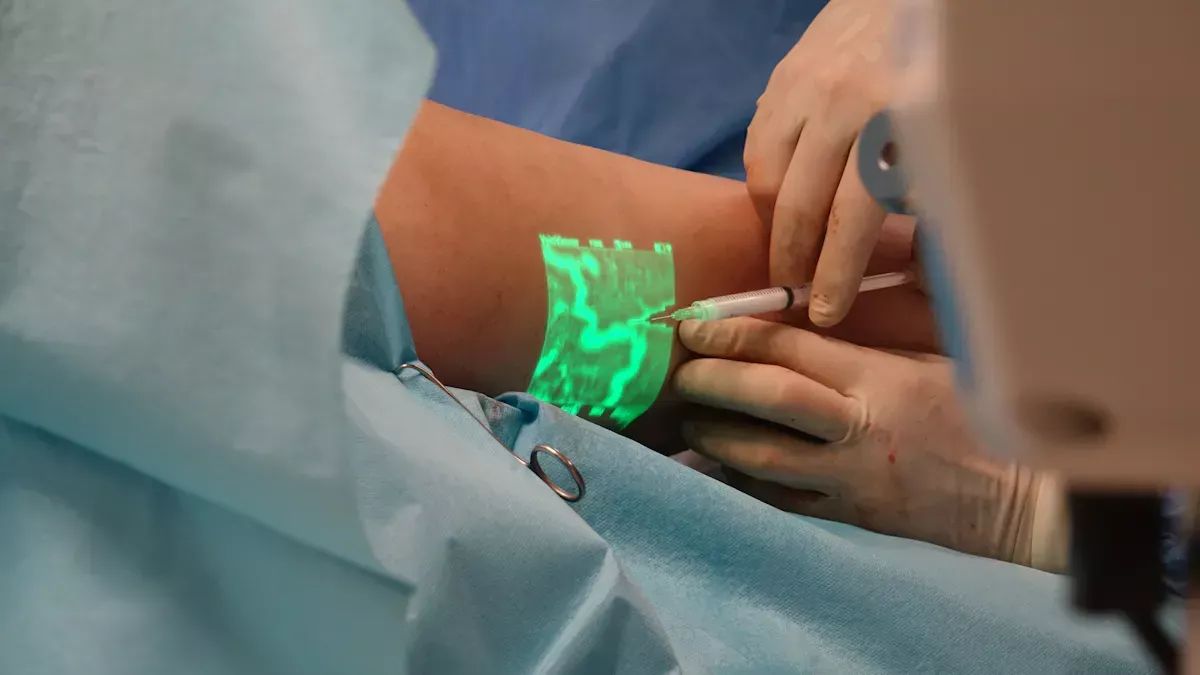
When you select a material for medical catheters, biocompatibility should be your top priority. Biocompatibility means the material works safely with your body’s tissues and fluids. TPU stands out because it causes minimal irritation and supports healing. You can trust that catheters made from TPU will not trigger unwanted reactions. The smooth surface of TPU reduces friction during insertion, which helps prevent micro-abrasions and lowers the risk of urinary tract infections. You also benefit from the material’s resistance to encrustation and biofilm formation, which keeps infection rates low.
TPU catheters are less likely to cause tissue irritation.
The material’s bio-inertness allows for long-term use with minimal discomfort.
ISO 10993 certification and FDA compliance ensure that TPU meets strict safety standards.
The durability of TPU means your catheter will not break or harden during use.
You want to avoid allergic reactions when using medical catheters. Biocompatibility plays a key role here. TPU’s controlled chemical composition means it rarely causes allergies. Unlike latex, which can trigger severe allergic responses, TPU is safe for most patients. You also avoid the risks linked to plasticizer leaching, which is common with PVC catheters. TPU’s chemical stability prevents harmful substances from entering your body, so you experience fewer adverse reactions.
TPU’s smooth, flexible surface reduces trauma and irritation.
The material resists degradation from disinfectants and bodily fluids.
Its bio-inertness and resistance to encrustation lower infection and inflammation rates.
You can use TPU catheters for both short-term and long-term applications with confidence.
You may wonder how TPU compares to other materials used in medical catheters. The table below highlights the differences:
Material | Mechanical Properties | Hemocompatibility | Sterilization Methods | Safety Concerns |
|---|---|---|---|---|
TPU | Excellent | Low thrombogenicity | Gamma radiation, EO | None noted |
PVC | Moderate | Higher thrombogenicity | Autoclave (not recommended) | Plasticizer leaching |
Silicone | Moderate | Moderate | Autoclave (less durable) | Less durable |
Latex | Moderate | Moderate | Autoclave | High allergy potential |
TPU offers superior biocompatibility compared to PVC, silicone, and latex. You get excellent mechanical strength, flexibility, and kink resistance. Unlike PVC, TPU does not leach plasticizers, so you avoid extra health risks. Silicone and latex catheters may not last as long or may cause allergic reactions. With TPU, you can rely on a safe, comfortable, and durable option for medical catheters.
Tip: Always check for biocompatibility certifications when choosing catheters to ensure patient safety and comfort.

You need catheters that can withstand the demands of medical procedures. Thermoplastic polyurethane offers high elasticity and tensile strength. This means you get a material that stretches without breaking and returns to its original shape. You can rely on tpu to resist kinking and tearing, even during challenging insertions. The strong structure of tpu ensures that catheters maintain their shape and function throughout use. You benefit from a device that stays reliable and safe.
TPU stretches easily and snaps back into place.
The material resists damage from bending and twisting.
You can use catheters in complex anatomical pathways without worrying about breakage.
Note: High tensile strength helps prevent accidental catheter failure, which improves patient safety.
You want catheters that adapt to different medical needs. TPU allows you to customize hardness, which means you can choose the right balance between flexibility and rigidity. This feature helps you match the catheter to the patient’s anatomy and the procedure’s requirements. Customizable hardness improves pushability, making it easier to guide the catheter through blood vessels. You also reduce friction, which lowers the risk of tissue damage.
Here is a table showing the benefits of customizable hardness in tpu:
Benefit | Description |
|---|---|
Customizable Hardness | Tailored flexibility and rigidity for various anatomical conditions. |
Improved Pushability | Easier navigation through vascular systems. |
Reduced Friction | Less resistance during insertion and movement. |
Biocompatibility | Safe for critical applications without harming blood cells. |
Flexibility and Toughness | Combines toughness and flexibility for better performance. |
Kink Resistance | Higher flexural modulus improves reliability during use. |
You can select catheters with the exact hardness needed for each patient. This customization leads to better outcomes and safer procedures.
You want to maximize patient comfort during catheterization. TPU’s flexibility plays a key role in reducing trauma. The soft, adaptable nature of tpu allows catheters to move smoothly through the body. You minimize pain and discomfort for patients. Flexible catheters lower the risk of micro-abrasions and tissue irritation. You also decrease the chance of complications, such as infections or inflammation.
Flexible catheters adapt to the patient’s anatomy.
Smooth surfaces reduce friction and make insertion easier.
You help patients recover faster and experience less pain.
Tip: Choosing flexible catheters made from tpu improves patient comfort and safety.
If you want reliable, comfortable, and adaptable catheters, consider Bova’s disposable white tpu plastic catheters. Bova offers products designed for flexibility and strength, ensuring the best experience for both patients and healthcare professionals.
You need catheters that can handle a wide range of substances in medical settings. Thermoplastic polyurethane offers high chemical resistance, which means it stands up to both harsh disinfectants and the fluids inside the human body. This property helps you avoid problems like swelling, softening, or breakdown of the catheter during use. When you use a disposable white TPU plastic catheter, you can trust it to perform well in contact with blood, urine, and cleaning agents.
Here is a table showing the types of substances TPU resists:
Substance Type | Examples |
|---|---|
Corrosive Substances | Alcohol, hydrogen peroxide, glutaraldehyde |
Biological Fluids | Body fluids, blood |
Medical Applications | Drugs (for infusion tubes and implants) |
Tip: Choosing catheters with high chemical resistance helps you reduce the risk of device failure and patient complications.
You want your catheters to stay strong and reliable throughout their use. Thermoplastic polyurethane maintains its structure even after exposure to bodily fluids and chemicals. This means you get a device that resists rupture, leakage, and wear. The natural elasticity of TPU allows the catheter to return to its original shape after bending or stretching. You also benefit from an abrasion-resistant surface, which protects the catheter as it moves through the body.
The table below highlights the features that help TPU maintain catheter integrity:
Feature | Description |
|---|---|
High tensile and impact resistance | Reduces the risk of rupture or leakage during use. |
Natural elasticity | Enables the catheter to return to its original shape after deformation. |
Abrasion-resistant surface | Minimizes wear when passing through sheaths or anatomical structures. |
Chemical resistance | Maintains structural integrity after repeated sterilization cycles and resists swelling or softening when in contact with solvents. |
Bio-stability | Resists enzymatic breakdown and microbial colonization, supporting extended dwell times. |
Note: Reliable catheter integrity means fewer replacements and better patient outcomes.
You may know that some catheters, like those made from PVC, require plasticizers to stay flexible. These additives can leach out and cause health risks. With TPU, you do not need plasticizers. This makes your catheters safer for patients and better for the environment. TPU catheters last longer, resist tearing, and do not degrade when exposed to disinfectants or medications. They also maintain flexibility and strength, even in curved pathways or under extreme conditions.
Here are some advantages of using plasticizer-free TPU catheters compared to PVC:
Advantage Category | Benefit of TPU Catheters Compared to PVC Catheters |
|---|---|
Durability | TPU resists tearing and abrasion, leading to up to twice the lifespan of PVC catheters. |
Chemical Resistance | TPU does not degrade with disinfectants or medications, allowing safe repeated sterilization. |
Kink Resistance | TPU maintains uninterrupted fluid flow even in curved pathways, reducing replacements. |
Temperature Tolerance | TPU remains stable under extreme storage and use conditions, ensuring consistent performance. |
Flexibility & Strength | TPU bends without breaking, reducing risk of in-body fracture and improving patient comfort. |
Biocompatibility | TPU is ISO 10993-certified, minimizing inflammatory response unlike some PVC additives. |
Plasticizer-Free Safety | TPU catheters do not require plasticizers such as phthalates, enhancing safety and eco-friendliness. |
Coating Compatibility | TPU easily integrates with antimicrobial or hydrophilic coatings, enhancing functionality. |
Regulatory Compliance | TPU meets FDA, CE, and other global standards for implantable and long-term devices. |
Eco-Friendliness | TPU is recyclable and free from harmful plasticizers found in many PVC catheters. |
Cost Efficiency | Longer lifespan reduces replacement frequency and clinical labor costs. |
Choosing plasticizer-free catheters supports patient safety and meets strict regulatory standards.
If you want to ensure the highest level of chemical resistance and safety in your disposable white TPU plastic catheters, consider Bova’s products. Bova offers reliable, high-quality catheters designed for demanding medical environments.
You need to monitor fluid movement in catheters to ensure patient safety and effective treatment. Thermoplastic polyurethane (TPU) gives you a clear advantage because many TPU tubes are clear or semi-transparent. This feature lets you see the fluid inside the catheter as it moves. You can spot air bubbles, blockages, or changes in color right away. Early detection of these issues helps you act quickly and prevent complications.
You can visually confirm that fluids flow smoothly through the catheter.
You notice any clots, air bubbles, or backflow without extra equipment.
You respond faster to problems, which improves patient outcomes.
Tip: Transparent catheters help you maintain control during procedures and reduce the risk of unnoticed complications.
When you use a disposable white TPU plastic catheter, you gain peace of mind. You know you can check the flow at a glance. This transparency supports both routine monitoring and emergency care. It also makes training easier for new healthcare professionals, as they can learn to identify problems visually.
You want tools that make your job easier and safer. TPU catheters offer several usability benefits that help you deliver better care. Their flexibility allows you to guide the catheter through complex anatomical pathways with less effort. You reduce the risk of kinking or damaging tissue, which lowers the chance of complications.
Flexibility lets you navigate curves and branches in the body smoothly.
Biocompatibility means you can use the catheter for longer periods without causing irritation or allergic reactions.
Customization options let you choose the right size, shape, and hardness for each procedure.
Medical professionals like you report that TPU catheters adapt well to different patient needs. You can select catheters with specific features for each case, which increases precision and effectiveness. The smooth surface of TPU also makes insertion and removal more comfortable for patients.
Note: When you use catheters that combine transparency, flexibility, and biocompatibility, you improve both your workflow and patient satisfaction.
If you want to experience these advantages, consider Bova’s disposable white TPU plastic catheters. Bova designs products that focus on usability and safety, helping you achieve the best results in every procedure.
You need catheters that withstand rigorous sterilization processes in medical environments. Thermoplastic polyurethane supports several sterilization methods, making it a reliable choice for disposable catheters. Scientific studies show that steam autoclaving is not suitable for TPU catheters because it can cause degradation and shape loss. You should avoid this method to preserve catheter integrity. Electron beam irradiation works as a sterilization option, but it may change the polymer chains, which could affect the catheter’s properties. Low temperature plasma sterilization stands out as the best method for TPU catheters. Plasma treatment modifies the surface without damaging the bulk material. You benefit from a cost-effective, easy-to-apply process that supports reuse and maintains safety. Plasma sterilization ensures your medical devices remain clean and functional.
Tip: Always select sterilization methods that protect both the catheter’s structure and patient safety.
You want catheters that perform well under different temperatures in medical settings. Thermoplastic polyurethane demonstrates excellent thermal stability, which means you can rely on it during procedures and storage. The table below shows key characteristics of TPU’s thermal performance:
Characteristic | Description |
|---|---|
Operational Temperature Range | Functions from -40°C to over 90°C, ensuring reliability in various conditions. |
Autoclaving Resistance | Withstands heat-based sterilization without warping or cracking. |
Flexibility in Cold | Stays flexible in cold environments, preventing brittleness. |
Thermal Degradation Resistance | Resists breakdown during extended procedures involving body heat or warming devices. |
You can use TPU catheters in both hot and cold medical environments. The material stays flexible and strong, so you avoid problems like brittleness or warping. This stability helps you deliver consistent care and reduces the risk of device failure.
You need catheters that last and perform reliably in medical procedures. Thermoplastic polyurethane catheters show exceptional durability and safety. Studies report that tunneled hemodialysis catheters made from TPU experience breakage in only 6.3% of cases after more than one year of use. You rarely see damage to the catheter tubing, which means high reliability. If an external component breaks, you can replace it without risking patient safety. Medical grade polyurethane catheters offer biocompatibility, flexibility, and durability. These features lower the risk of allergic reactions and infections compared to other materials.
TPU catheters last longer than many alternatives.
You see fewer complications and replacements.
Patients benefit from safer, more reliable medical devices.
Note: Choosing TPU catheters improves patient outcomes and reduces clinical costs.
If you want dependable, sterilization-ready catheters for your medical practice, consider Bova’s disposable white TPU plastic catheters. Bova delivers products that meet strict sterilization standards and offer lasting reliability. Visit Bova’s website to learn more about their medical solutions.
You want to lower the risk of infection when using disposable medical catheters. Thermoplastic polyurethane gives you a strong advantage in this area. Manufacturers can enhance TPU with nanomaterials like silver or zinc oxide. These additions give the catheter powerful antibacterial and antibiofilm properties. When you use a catheter made with these enhancements, you help prevent bacteria from growing on the surface. This makes TPU an excellent choice for self-disinfecting catheters.
In many hospitals, catheter-associated urinary tract infections (CAUTIs) are a major concern. Antimicrobial TPU coatings have shown great results in reducing these infections. You protect your patients and help lower hospital readmissions by choosing catheters with these coatings.
The bio-inert nature of TPU minimizes irritation and inflammation in the bladder.
You see fewer cases of encrustation and biofilm buildup, which are common causes of infection.
The smooth surface of TPU resists microbial colonization, making it harder for bacteria to stick and grow.
Tip: Using antimicrobial TPU catheters helps you provide safer care and improves patient comfort during long-term use.
You need catheters that can handle the demands of busy medical settings. TPU stands out for its durability and resistance to wear. In abrasion tests, such as the DIN-53516, TPU 1185 A showed an abrasion amount of less than or equal to 25mm³. This result means the material resists damage better than most engineering plastics. You can trust that your catheter will not break down easily, even with frequent movement or contact with other surfaces.
TPU meets ISO 10993 medical grade and FDA food contact standards, so you know it is safe for medical use.
The elasticity of TPU allows it to bend and flex without cracking or tearing.
Medical professionals use TPU in catheters and wound dressings because it stands up to repeated use and exposure to bodily fluids.
You benefit from a catheter that keeps its shape and function over time. This durability means fewer replacements and less risk of complications for your patients.
Note: Choosing a catheter with high abrasion resistance and antimicrobial properties gives you peace of mind in demanding environments.
If you want reliable, infection-resistant catheters, consider Bova’s disposable white TPU plastic catheters. Bova designs products that focus on both antimicrobial protection and long-lasting durability, helping you deliver the best care possible.
You want a supplier who understands the demands of medical environments. Bova brings years of experience in designing disposable white tpu plastic catheter products. The company focuses on meeting the needs of healthcare professionals and patients. You benefit from Bova’s deep knowledge of catheter technology and medical standards. Bova’s team works closely with hospitals and clinics to ensure every disposable white tpu plastic catheter meets strict requirements for safety and performance.
Tip: When you choose Bova, you gain access to expert guidance and support for selecting the right disposable white tpu plastic catheter for your practice.
Bova’s expertise helps you avoid common problems like device failure or patient discomfort. You can trust their catheters to deliver consistent results in both routine and emergency procedures.
You expect high quality and innovative solutions in medical devices. Bova uses advanced manufacturing techniques to produce disposable white tpu plastic catheter products that stand out for safety and performance. The company invests in research to improve catheter design and material properties. You see the benefits in features like enhanced flexibility, kink resistance, and antibacterial coatings.
Bova’s commitment to quality means you receive catheters that pass rigorous testing. The company follows international standards for safety, including ISO and FDA guidelines. You can rely on Bova’s disposable white tpu plastic catheter to maintain integrity during use and support patient comfort.
Here is a table showing Bova’s quality advantages:
Feature | Benefit to You |
|---|---|
Rigorous Testing | Reliable safety and performance |
Innovative Materials | Improved flexibility and durability |
Antibacterial Options | Reduced infection risks |
Regulatory Compliance | Peace of mind for patient safety |
Note: Bova’s focus on innovation ensures you always have access to the latest advancements in disposable white tpu plastic catheter technology.
You want a simple and reliable way to purchase disposable white tpu plastic catheter products. Bova makes the process easy for you. You can visit their website at https://www.bovamed.com/ to explore their full range of catheters. The site provides detailed product information, safety certifications, and ordering options.
Browse the catalog for disposable white tpu plastic catheter solutions.
Review product specifications and safety features.
Contact Bova’s support team for expert advice.
Place orders directly through the website.
You gain confidence knowing Bova stands behind every disposable white tpu plastic catheter with a commitment to safety and performance. The company offers fast shipping and responsive customer service. You can trust Bova as your preferred brand for disposable white tpu plastic catheter needs.
Choosing Bova ensures you receive high-quality catheters that support patient safety and deliver reliable performance in every procedure.
You gain several advantages when you choose thermoplastic polyurethane for disposable medical catheters. The table below shows why TPU stands out:
Advantage | Description |
|---|---|
Excellent processing | You get catheters made with reliable methods. |
Low-temperature flexibility | Catheters stay usable and comfortable even in cold conditions. |
Thermal stability | You see consistent performance during procedures. |
Superior biocompatibility | You protect patients from harmful microorganisms and allergic reactions. |
To source high-quality catheters, you should:
Prefer suppliers who use non-toxic, traceable materials.
Request batch traceability and third-party lab verification.
Choose suppliers who reduce environmental impact.
Ask for a Material Test Report for each batch.
You improve patient safety, device performance, and comfort by selecting Bova’s disposable TPU catheters. Visit Bova’s website for trusted solutions.
You benefit from TPU’s high flexibility and wear resistance. This material meets biocompatibility requirements and supports safe use in medical devices. You see reliable performance in both intravenous catheters and urinary catheters.
TPU passes biocompatibility standards and usp class vi standards. You avoid allergic reactions and irritation. You trust TPU for medical devices because it meets strict regulations and ensures patient safety.
You rely on TPU catheters for their sterilization resistance. These medical devices stay strong after repeated cleaning. You see no loss of mechanical strength or flexibility, which helps prevent device failure.
You trust TPU catheters because they comply with fda regulations. These medical devices meet biocompatibility requirements and pass safety tests. You can use them confidently in hospitals and clinics.
Manufacturers use TPU to create medical devices with antimicrobial properties. You see fewer infections and safer patient outcomes. The development of antimicrobial tpu improves catheter safety and reduces hospital readmissions.
You depend on TPU’s mechanical strength for durable medical devices. Catheters resist bending and breaking. You experience fewer replacements and better patient comfort.
You select Bova for high-quality medical devices. Bova offers disposable TPU catheters that meet biocompatibility requirements and regulations. You find reliable products at Bova’s website.
You use TPU catheters for intravenous catheters and urinary catheters. These medical devices provide flexibility, biocompatibility, and sterilization resistance. You see improved patient comfort and safety.


