

close
Choose Your Site
Global
Social Media
Views: 0 Author: Site Editor Publish Time: 2026-06-29 Origin: Site


Malignant and benign biliary obstructions present severe clinical challenges. Restoring physiological bile flow remains fundamentally essential for patient recovery. Medical practice continues shifting away from cumbersome external drainage systems. We now rely heavily on elegant internal solutions. Internal routing minimizes the daily physical burden on patients. It drastically reduces localized infection rates. Furthermore, it prevents the dangerous electrolyte depletion often caused by prolonged external bile loss.
Selecting the right internal drainage device requires careful clinical evaluation. You must weigh specific design features against known procedural risks. Clinicians evaluate retention mechanisms and material biocompatibility daily. Occlusion and migration present ongoing challenges in any intervention. This guide details these critical evaluation criteria. You will learn how to balance mechanical properties with anatomical realities. Ultimately, understanding these dynamics ensures optimal patient outcomes and reliable procedural efficiency.
Internal drainage restores natural digestion and eliminates the need for external bags, significantly improving patient quality of life.
A biliary tube offers a distinct middle ground between temporary external catheters and permanent metallic biliary stents.
Design features like a single pigtail drainage tube configuration are critical for preventing device migration within the biliary tract.
Evaluating internal drainage tubing requires balancing material flexibility, radiopacity, and resistance to encrustation to maximize patency lifespans.
Physiological restoration stands as the primary goal in biliary interventions. Routing bile directly into the duodenum provides profound systemic benefits. Bile salts naturally emulsify dietary fats. They facilitate the absorption of vital fat-soluble vitamins. External drainage systems continuously remove these digestive fluids from the body. This continuous loss creates severe clinical complications over time. Patients often experience rapid dehydration. They face dangerous sodium and potassium depletion. An internal biliary tube reverses these negative trends. It reestablishes the natural enterohepatic circulation required for proper digestion.
Patient quality of life improves drastically following internal conversion. External collection bags impose a constant psychological burden. Patients struggle with daily hygiene routines. Showering becomes a complex, stressful process. Sleep quality suffers due to the fear of dislodging external catheters. Social activities often diminish due to embarrassment or physical discomfort. Eliminating the external bag removes these barriers entirely. Patients regain their physical mobility and personal dignity. They experience immediate psychological relief.
Infection control represents another major operational advantage. External catheters provide a direct pathway for skin flora. Bacteria easily migrate along the percutaneous tract. This frequently leads to localized site infections or systemic sepsis. Internal systems close this anatomical gateway. Evidence demonstrates a sharp reduction in retrograde infections when utilizing internal routing. You reduce the burden on nursing staff by eliminating daily wound care. Fewer catheter-site complications directly translate to improved clinical efficiency.
Nutritional Recovery: Internal bile flow supports continuous fat absorption and prevents severe malnutrition.
Electrolyte Stability: Retaining physiological fluids prevents dangerous shifts in potassium and sodium levels.
Psychological Comfort: Removing external medical devices restores patient confidence and independence.
Infection Reduction: Closing the percutaneous tract eliminates primary pathways for bacterial colonization.
Navigating the various drainage solutions requires understanding distinct device categories. Clinicians must match the device to the specific patient pathology. Malignant strictures often require permanent palliative care. Benign strictures or surgical recoveries demand different approaches. Knowing when to deploy each option prevents procedural failures.
Plastic or metal configurations typically define the biliary stent category. Self-expanding metal stents provide powerful radial force. They hold open tough malignant strictures. Metal options remain in the patient permanently. They offer excellent long-term patency but resist easy removal. Rigid plastic stents serve similar palliative functions. They provide temporary relief but lack the flexibility required for complex anatomical turns.
Internal tubes offer a highly flexible alternative. Clinicians prefer them for post-operative healing and benign stricture management. Their soft polymer construction accommodates dynamic patient anatomy. They slide easily through tortuous biliary trees. They serve as excellent transitional therapies. You can easily remove or exchange these flexible tubes during follow-up procedures. They provide temporary physiological drainage without committing the patient to a permanent metallic implant.
Catheter transitioning requires a deliberate clinical workflow. You cannot immediately deploy an internal solution in acutely inflamed tracts. Clinicians usually place a percutaneous external drain first. This allows the tract to mature over several weeks. Once inflammation subsides, doctors perform a "capping" trial. They clamp the external tube to test physiological tolerance. If the patient digests normally without pain, the conversion proceeds. The physician then removes the external component entirely. They deploy the definitive internal drainage system to complete the transition.
Feature | Biliary Stents (Metal/Rigid) | Flexible Internal Biliary Tubes |
|---|---|---|
Primary Use Case | Malignant strictures, permanent palliation | Benign strictures, surgical recovery, transitional care |
Material Flexibility | Low to Moderate (Rigid plastic or expanding metal) | High (Soft polymers, highly conformable) |
Exchangeability | Difficult (Tissue ingrowth common in metal) | Easy (Designed for routine scheduled replacements) |
Radial Force | High (Actively dilates tough strictures) | Low (Relies on existing tract patency) |
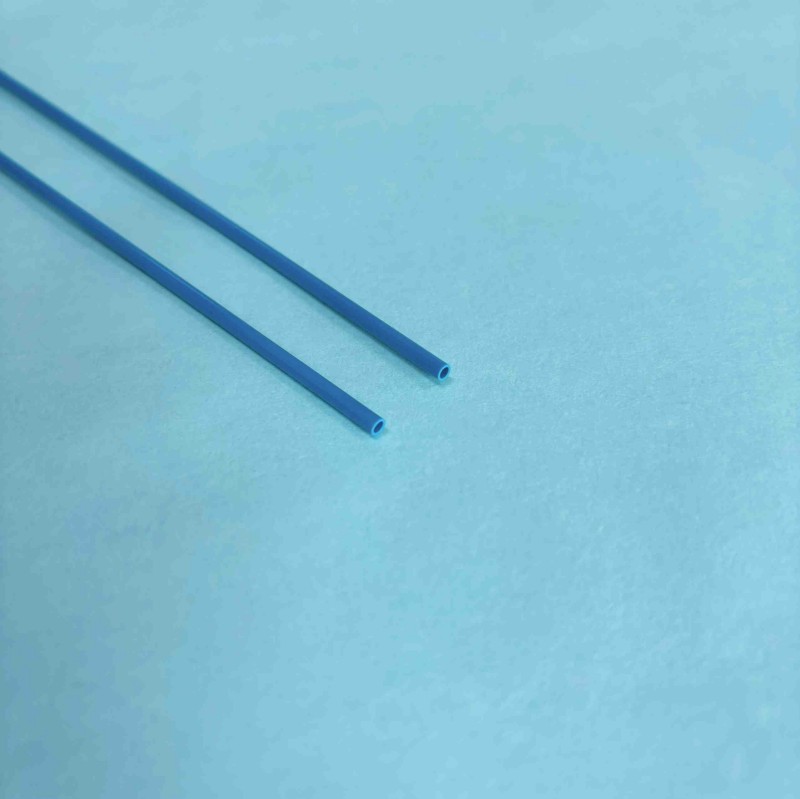
Device migration causes significant clinical complications. Peristalsis in the duodenum constantly pulls against any implanted device. Straight catheters frequently dislodge under these natural physiological forces. A single pigtail drainage tube configuration solves this mechanical challenge. The curled distal end deploys smoothly in the duodenum. It acts as an atraumatic anchor against the intestinal wall.
This coiled structure relies on advanced material memory. During insertion, a rigid guidewire straightens the pigtail. Once the physician removes the wire, the polymer aggressively snaps back into its coiled shape. This robust coil memory prevents both upward migration into the liver and downward expulsion into the bowel. Reliable retention mechanisms directly reduce emergency readmissions for dislodged tubes.
Selecting the right polymer dictates device longevity. Continuous exposure to bile represents a harsh chemical environment. Biliary sludge naturally accumulates on foreign surfaces over time. You must carefully evaluate internal drainage tubing materials. Polyurethane offers high tensile strength and excellent thin-wall construction. This maximizes the inner lumen diameter for optimal flow. However, polyurethane can sometimes attract biofilm formation faster than alternatives.
Silicone provides superior chemical inertness. It resists rapid encrustation and protein deposition. Silicone tubes generally maintain patency slightly longer in high-sludge environments. However, their thicker walls slightly reduce the inner drainage channel. Regardless of the chosen material, natural occlusion remains inevitable. Most standard polymers offer an expected patency duration of three to six months. Clinicians must balance inner lumen size against surface inertness when making procurement decisions.
Precise anatomical placement requires exceptional procedural visibility. Interventional radiologists rely heavily on fluoroscopy during insertion. Transparent polymers remain entirely invisible under standard x-ray imaging. Manufacturers must integrate radiopaque elements into the tube design. Barium sulfate blending represents a common and cost-effective visibility solution. It makes the entire shaft glow lightly under fluoroscopic observation.
Premium designs incorporate distinct platinum-iridium marker bands. These dense metal bands sit precisely at the deployment zones. They provide razor-sharp contrast on clinical monitors. Clinicians easily confirm that the distal tip has successfully cleared the stricture. Excellent radiopacity accelerates procedure times. It also allows for effortless future monitoring. Follow-up abdominal x-rays quickly confirm that the device remains in its proper anatomical position.
Transparent communication regarding product limitations prevents adverse clinical events. All plastic and polymer internal tubes eventually occlude. Biliary sludge contains cholesterol crystals, calcium bilirubinate, and dense glycoproteins. This mixture inevitably coats the inner lumen. Biofilm-producing bacteria accelerate this narrowing process. You must acknowledge this clinical reality. Tubes do not provide a permanent fix. They require structured, scheduled replacement intervals. Proactive exchanges every three to six months prevent emergency blockages. Waiting for a complete occlusion puts the patient at severe risk.
Ascending cholangitis represents the most dangerous consequence of tube occlusion. When a tube blocks, stagnant bile accumulates rapidly behind the stricture. This stagnant fluid creates an ideal breeding ground for enteric bacteria. The pressure forces infected bile backward into the hepatic system. Patients develop fever, severe jaundice, and right upper quadrant pain. This systemic infection progresses to septic shock rapidly if left untreated. Strict patient monitoring protocols remain absolutely mandatory. Educate patients on recognizing early warning signs. Rapid clinical intervention prevents an occluded tube from becoming a fatal complication.
Anatomical limitations occasionally cause internal drainage failures. Standard devices assume a relatively normal gastrointestinal tract. Severe duodenal obstruction prevents proper pigtail deployment. Tumors invading the ampulla of Vater block the natural exit point. Complete hilar isolation presents another major challenge. If separate bile ducts no longer communicate, a single internal tube cannot drain the entire liver. In these complex scenarios, standard internal routing fails. Clinicians must pivot to alternative approaches. They may employ bilateral external drains or complex surgical bypasses. Recognizing these anatomical constraints prevents futile deployment attempts.
Procuring reliable medical devices requires strict logistical evaluation. Patient anatomy varies drastically across populations. You need a comprehensive size portfolio to address diverse clinical needs. Standardized internal tubes range from 7F to 14F in diameter. Smaller sizes navigate tight pediatric or heavily strictured anatomies. Larger French sizes handle thick, viscous bile and heavy sludge burdens. Length versatility matters equally. Sourcing varying shaft lengths ensures accurate placement from the hepatic hilum down to the duodenum. A limited catalog forces clinicians into compromising anatomical fits.
Regulatory compliance guarantees fundamental patient safety. Procurement teams must mandate strict quality assurance parameters. ISO 13485 certification demonstrates a manufacturer's commitment to rigorous medical device manufacturing standards. FDA clearance or CE marking validates the clinical efficacy of the product. These regulatory stamps are not merely administrative hurdles. They prove that the materials passed severe biocompatibility and cytotoxicity testing. Sourcing unverified devices introduces massive liability and direct patient harm. Always demand full documentation before integrating new tubing into clinical workflows.
Supply chain reliability ensures uninterrupted patient care. High-volume interventional radiology and endoscopy departments consume vast quantities of these devices weekly. Evaluate manufacturer lead times carefully. Stockouts delay critical palliative procedures. Packaging integrity also requires close inspection. Validated sterilization methods, such as ethylene oxide gas or gamma irradiation, must maintain a secure sterile barrier during transit. Bulk procurement scalability remains crucial for large hospital networks. Establish direct communication with suppliers regarding inventory buffers and emergency shipping capabilities. A reliable supply chain directly supports consistent clinical excellence.
Selecting the right internal biliary tube requires balancing mechanical retention with material patency. Physiological restoration heavily depends on a reliable, unobstructed flow path. You must carefully match the tube’s flexibility and coil memory against the patient’s specific anatomical challenges. A thorough evaluation of polymer blends directly impacts how long the device resists sludge buildup.
Standardized, high-quality tubing drastically reduces unscheduled readmissions for tube exchange. When devices stay patent longer and resist migration, healthcare facilities operate more efficiently. Patients experience fewer stressful emergency interventions. Investing time in proper device selection yields measurable clinical and operational dividends.
Clinical buyers should immediately request physical product samples for tactile evaluation. Review technical specification sheets to verify radiopacity and French size availability. Consult directly with suppliers on specific pigtail configurations. Proactive engagement ensures your facility stocks the most effective drainage solutions available.
A: Stents are typically shorter and rigid. They use plastic or self-expanding metal for long-term or permanent placement in malignant strictures. Tubes are highly flexible and easily exchangeable. Clinicians use tubes for temporary physiological drainage, benign stricture management, or post-operative healing. Tubes adapt better to complex, dynamic anatomies.
A: The curled "pigtail" end acts as a soft, atraumatic anchor. It usually deploys within the duodenum. The polymer's strong coil memory resists the natural peristaltic forces of the bowel. This specific geometry prevents the device from dislodging upward into the liver or passing entirely into the digestive tract.
A: Standard internal tubes require routine replacement every 3 to 6 months. This timeline is dictated by natural material degradation and inevitable biliary sludge occlusion. Internal tubes do not provide a permanent fix. Scheduled proactive exchanges prevent dangerous blockages and subsequent bacterial infections.
A: Yes. Clinicians first allow the percutaneous tract to heal and mature. They then perform a "capping" trial. The external drain is clamped to test if the patient can tolerate natural physiological bile flow. If digestion normalizes without pain, the physician fully converts the system to a completely internal tube.


